
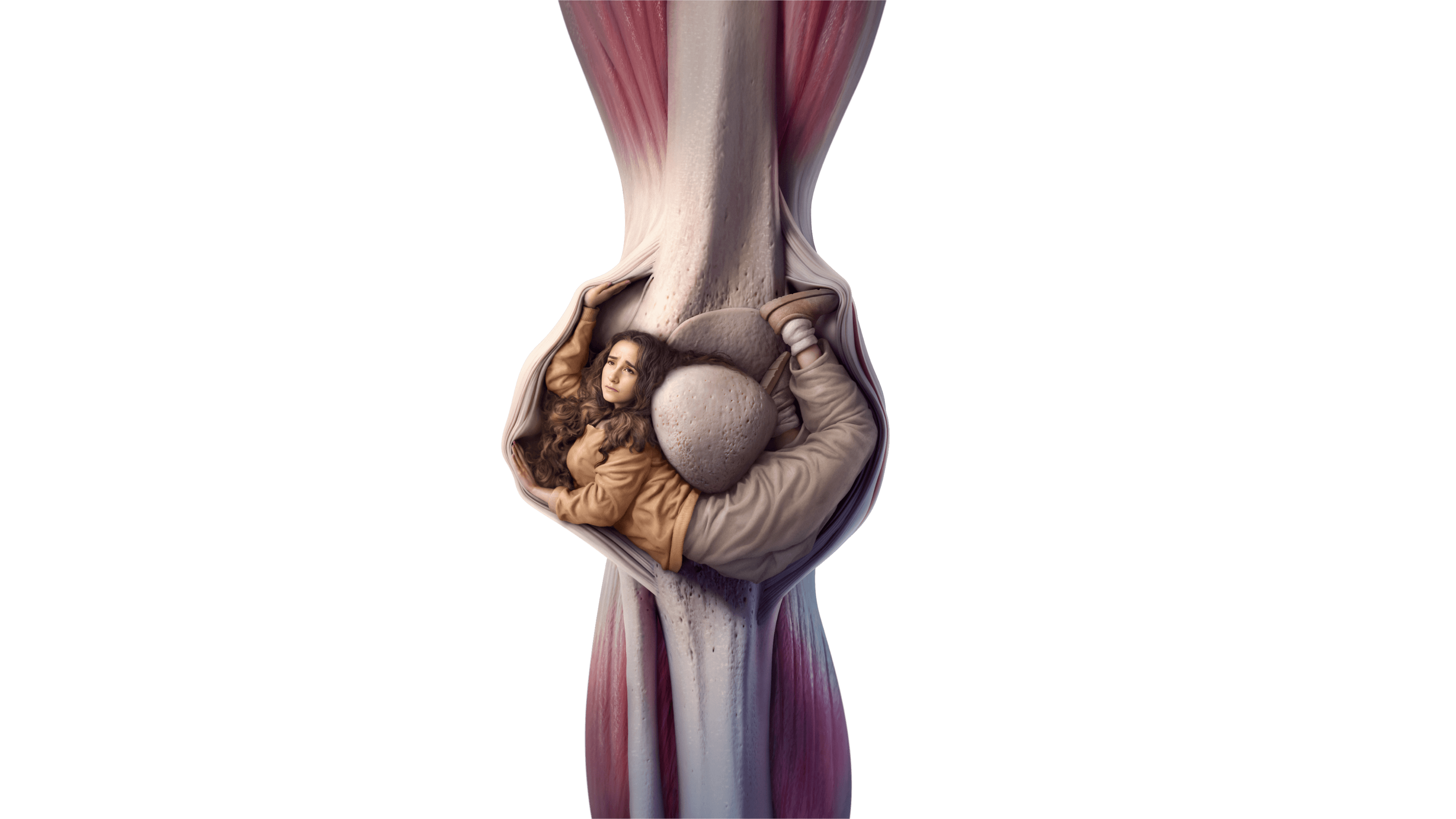
Tenosynovial giant cell tumor (TGCT) can cause pain, disability and reduced work productivity, with detrimental effects on quality of life and a substantial economic impact.1,2
Data from a global patient registry and prospective studies show how TGCT can significantly impact patients’ physical and mental health1,2
92%
(n=457/497)
reported pain*1
85%
(n=423/497)
reported limited
range of motion*1

83%
(n=410/497)
reported stiffness/
tightness*1
19%
(n=25/135)
demonstrated at least
moderate anxiety or
depression
prior to study enrollment†2
TGCT can also place a heavy strain on social, professional and financial aspects of life (e.g., sick leave, medical costs)1,3
63%
(n=187/299)
were unable to perform
sport activities‡3

23%
(n=115/497)
changed occupation or
retired prematurely*1
*The TGCT Support Registry (launched in 2022), collected questionnaire data every six months on patients’ TGCT experiences. N=497 across 32 countries: diffuse (n=355) nodular (n=94), and unknown subtype (n=48). Data cut off: October 6, 2022–December 06, 2023.1 †Outcome reported from an EU subgroup analysis of TOPP (N=137), a prospective, observational study of patients with D-TGCT. Data was collected at baseline (12-month period prior to entry) and after 12 months of follow-up.2 ‡Members of the TGCT Facebook group, PVNS is Pants!!, completed a 6-month e-survey. Total: 337 responses from 30 countries (N-TGCT n=72; D-TGCT n=237; unknown subtype n=28).3
 Click here to find out how